Cryptographic Foundations & Mathematical Models
Dedicated to the mathematical definitions, security reductions, threat topologies, and state-machine invariants underlying modern offline 2FA, zero-knowledge storage, and human-in-the-loop agent delegation.
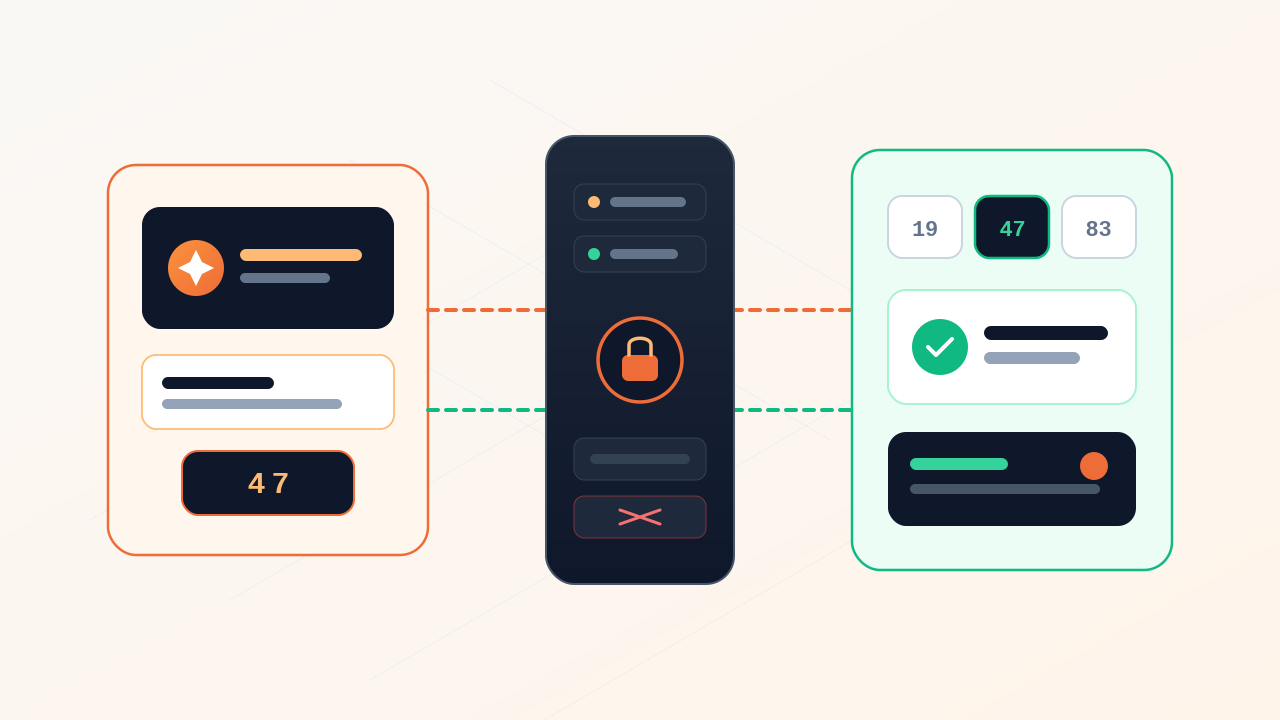
Ephemeral Delegation Protocols for Autonomous Agents: ECDH Channels, Blind Matching & Linear Consumption
When autonomous agents must authenticate against services lacking scoped OAuth delegation, handing over long-lived credentials recreates the classic Confused Deputy vulnerability. This note formalizes a zero-knowledge delegation protocol built on ephemeral ECDH envelopes, 1-of-k blind number matching, and transactional single-use erasure.

Mathematical Foundations of TOTP: Why Offline Generators Stay Synchronized Without Network State
Even in complete network isolation, two independent devices converge on the exact same 6-digit token every 30 seconds. Rather than transmitting runtime secrets, RFC 6238 reduces authentication to deterministic time quantization over a keyed Pseudorandom Function (PRF).

Authentication Topology & Threat Models: Why Offline TOTP Outperforms SMS and Email OTP
The security and availability of any verification factor are bounded by how many untrusted third-party systems sit inside its delivery path. Comparing topologies directly shows why PSTN SMS and SMTP email introduce structural vulnerabilities that RFC 6238 TOTP—paired with zero-knowledge recovery—avoids cleanly.
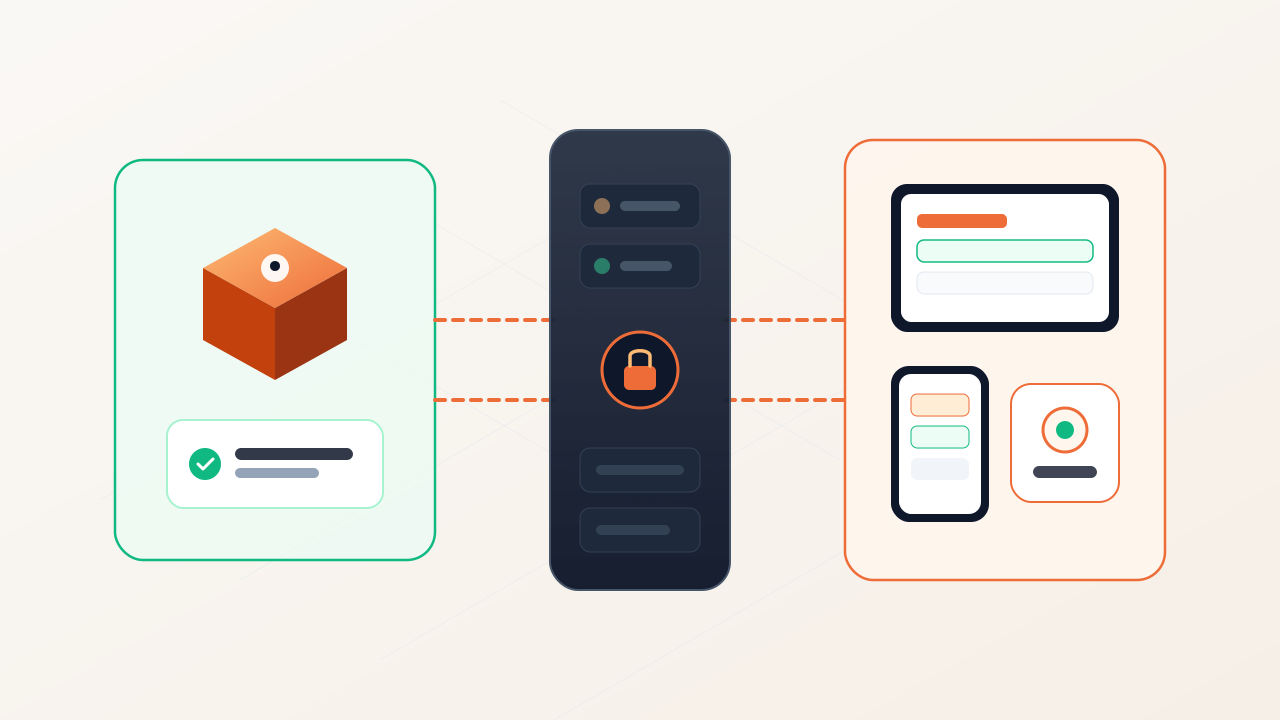
When the Cloud Is Just a Blind Wall: Cryptographic Bounds and Convergence in Zero-Knowledge Vaults
How can distributed devices reconcile offline additions, deletions, and edits seamlessly while mathematically guaranteeing that a full server compromise yields zero readable secrets or service metadata? Here are the cryptographic compositions and distributed merge invariants.